CRA Cyber Resilience Act
Helping your products meet CRA requirements.
The Cyber Resilience Act (CRA) introduces new cybersecurity requirements for products with digital elements throughout their entire lifecycle.
We help manufacturers, system integrators and technology suppliers implement secure development practices, vulnerability management, SBOM and technical documentation required to demonstrate compliance.

What does CRA mean for your organization?
The Cyber Resilience Act affects products that contain software or digital functionality.
It typically applies to:
- specialized software
- IoT devices
- embedded systems
- industrial control systems
- railway and transportation technologies
- networking and communication equipment
Manufacturers are now expected to take responsibility for product cybersecurity throughout the entire product lifecycle. Key requirements include vulnerability management, technical documentation, secure development practices and communication across the supply chain.
What areas does CRA address?
Key CRA Areas and Pillars?
From a manufacturer’s perspective, CRA is built around several key areas:
- secure product development
- Software Bill of Materials (SBOM)
- vulnerability management
- technical documentation
- supply chain communication
This is exactly what the Cyber Resilience Act expects organizations to address in order to demonstrate cybersecurity throughout the product lifecycle.

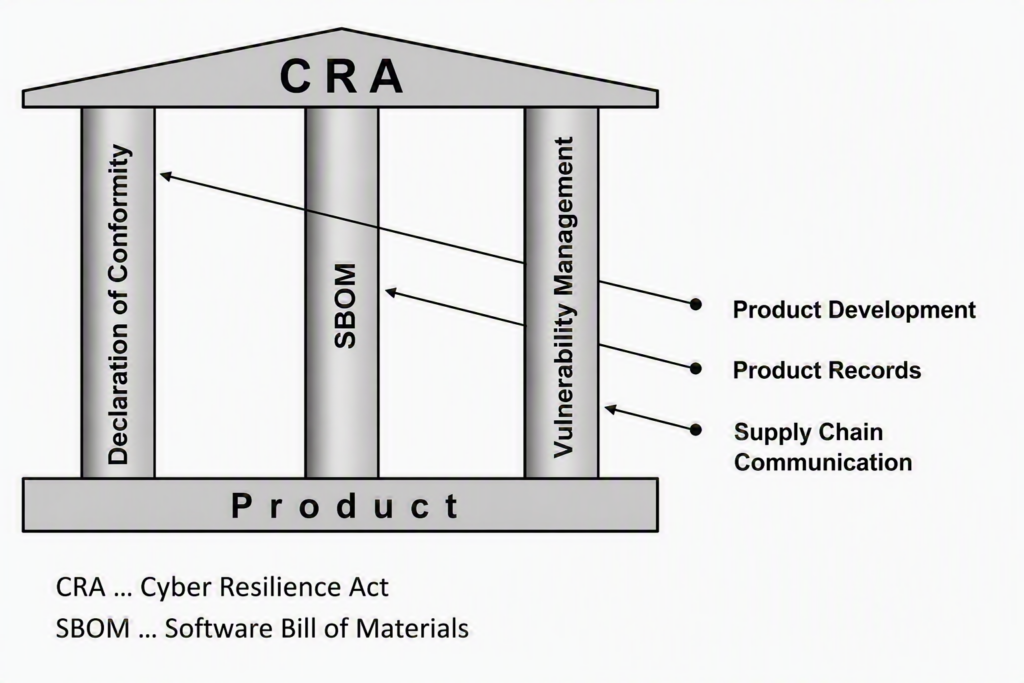

How KINT Can Help
How to Address CRA Requirements
CRA Impact Assessment
We assess whether CRA applies to your product and to what extent.
Secure Product Development
We help integrate cybersecurity requirements into existing development processes.
Vulnerability Management
We establish processes for identifying, assessing and addressing vulnerabilities.
SBOM
We help create and maintain a Software Bill of Materials (SBOM).
Technical Documentation
We prepare the documentation and supporting evidence required for the Declaration of Conformity and demonstration of CRA compliance.
CRA and IEC 62443 as a Foundation
CRA defines obligations for manufacturers and cybersecurity requirements for products with digital elements.
IEC 62443 provides a proven framework for implementing these requirements in development, system integration and maintenance processes.
CRA defines what needs to be achieved.
IEC 62443 helps define how to achieve it.

Integrating CRA into existing development
CCRA Does Not Mean Starting from Scratch
In most cases, CRA requirements can be integrated into existing development processes.
The goal is not to create parallel processes, but to extend existing development activities with cybersecurity requirements, vulnerability management and the necessary documentation.
COMMON CHALLENGES ORGANIZATIONS FACE
- Product Development: missing cybersecurity requirements and a formalized development process.
- Open-Source Components: missing inventory of components and their dependencies (SBOM).
- Product Maintenance: absence of a vulnerability management process.
- Documentation: insufficient evidence to support the Declaration of Conformity.
- Suppliers: unclear responsibilities and information flow across the supply chain.
Not Sure Whether CRA Applies to Your Product?
We help organizations assess the impact of CRA, identify key compliance gaps and define a practical implementation roadmap.
- Initial Consultation
- CRA Applicability Assessment
- Gap Analysis
- Implementation Roadmap